The 2026 budget passed its first test, yet the battles over defense, taxes, and reforms expose a government more focused on managing crises than shaping policy.
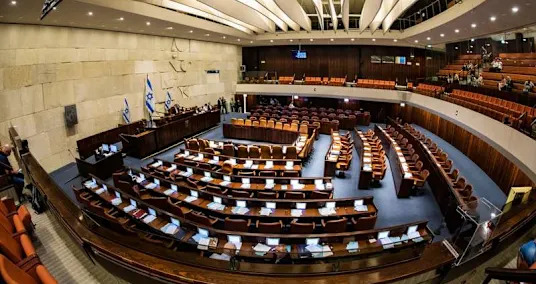
Israel’s state budget for 2026 passed its first hurdle on Friday, receiving approval from the government in the annual high-stakes process, which could potentially trigger early elections.
Israel’s various ministries battled from Thursday morning until mid-Friday over the funds that they would receive.
The approved budget will still need to pass three votes in the Knesset’s plenum to come into effect. If it is not approved by the end of March, marking the end of the fiscal year, the Knesset is dissolved, and elections are declared.
Overall, the total approved budget came out to be approximately NIS 662 billion ($204 b.), and the deficit ceiling for 2026 will be 3.9% of GDP.
Here are some of the agreements reached that affect the entire spectrum of Israeli society.
Defense Minister Israel Katz and Finance Minister Bezalel Smotrich had previously clashed over defense funding, yet they ultimately came to an agreement.
The defense budget framework for 2026 was agreed to be set at NIS 112 billion ($34.6 b.).
According to the agreement, there will be a reduction of the annual number of reservists from 60,000 to 40,000.
In addition, a budget package totaling approximately NIS 725 million ($224 m.), spread over three years, was agreed upon.
The package was created to strengthen security in the West Bank. Within the initiative are investments in armored transport, paving roads and routes, establishing IDF bases there, as well as advancing projects along Israel’s eastern border.
Smotrich announced various financial initiatives for the country that were also agreed upon. Among them were plans related to taxation.
The finance minister outlined an initiative that calls for reducing the tax burden on the middle class by widening the brackets taxed at 20% and 31%.
This will primarily reduce tax liability for middle-income earners and moderately benefit higher-income earners, the Finance Ministry said.
Smotrich’s controversial dairy reform was also approved by the government.
The reform calls to make various changes to Israel’s dairy production, claiming to lower the cost of living by addressing monopolies dominating the dairy market. It also calls for reducing the price of milk and cheese for Israeli citizens.
Agriculture and Raw Food Security Minister Avi Dichter reportedly voted against the dairy reform, being an outspoken critic of it and expressing concerns that it could cause harm to Israel’s local dairy farms.
latest_posts
- 1
 Blue Origin's next space tourism flight will break new ground for people with disabilities
 - 2Auschwitz Committee wants German auction of Holocaust items scrapped
- 3A Pompeii site reveals the recipe for Roman concrete. It contradicts a famous architect’s writings
- 4‘RuPaul's Drag Race’ Season 18: How to watch without cable, premiere time, cast list and more
- 5The Magnificence of Do-It-Yourself Skincare: Regular Recipes and Tips


- What we know about Jonathan Ross, the ICE agent who shot and killed Renee Nicole Good in Minneapolis
- Commonsense Ways to work on Your Funds with a Restricted Pay
- How does Spotify Wrapped calculate your listening age? What your number says about you.
- The Best 10 Innovation Advancements of the Year
- Muslim nations condemn new Israeli death penalty law
- EU agrees on agriculture safeguards as fronts harden in Mercosur deal
- Mali and Canadian miner Barrick agree to resolve tax dispute, ending 2-year standoff
- A definitive Manual for 2024's Most In vogue Wedding Dresses
- Mom warns of Christmas gift hazard as daughter recovers in hospital