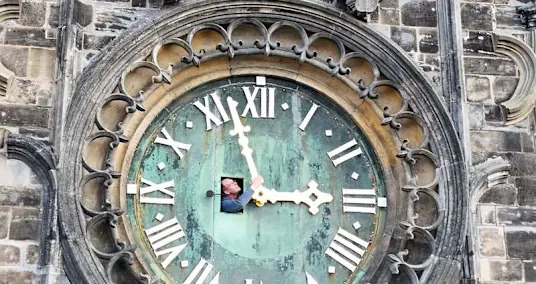
Clocks across the majority of European countries are set to go forward by one hour early on Sunday as the continent moves to daylight saving time, also known as summer time.
Clocks in most European nations including Germany advance by one hour at 2 am (0100 GMT) to 3 am, heralding longer evenings and brighter days.
This means that for the coming months parts of Europe will be on Central European Summer Time (CEST), before moving back to Central European Time (CET) in the autumn, when clocks go back again by an hour on October 25.
The aim of the change is to make better use of daylight in the shorter days of the winter in the northern hemisphere.
The signal for the automatic changeover of the clocks in Germany comes from the Federal Institute of Physics and Metrology (PTB) in the northern city of Braunschweig, also known as Brunswick in English.
The institute's experts ensure that radio-controlled clocks, station clocks and many industrial clocks are supplied with the signal via a long-wave transmitter called DCF77 in Mainflingen near Frankfurt.
latest_posts
- 1
 Kendall Jenner addresses long-standing rumor about her sexuality
 - 2The 1 question we have to ask ourselves about the Taylor Frankie Paul 'Bachelorette' scandal
- 3Authentic Urban areas: Rich Legacy and Lively Societies
- 4NASA releases new photos of interstellar comet 3I/ATLAS
- 5The top astronomical discoveries of 2025




- Empathy and reasoning aren’t rivals – new research shows they work together to drive people to help more
- Tyler Childers' 'Snipe Hunt' 2026 Tour: How to get tickets, presale times, prices and more
- 2 new malaria treatments announced as drug resistance grows
- Artemis II astronauts arrive in Florida to prepare for launch to the moon
- Iran’s Crown Prince Reza Pahlavi backs protests: Join your fellow citizens in the streets
- $2,000 tariff rebate checks? 50-year mortgages? Making sense of Trump's new 'affordability' proposals.
- What did the gov’t approve for Israel’s 2026 state budget?
- Why are malnutrition deaths soaring in America?
- 5 Breakout Stars in Ongoing television Series